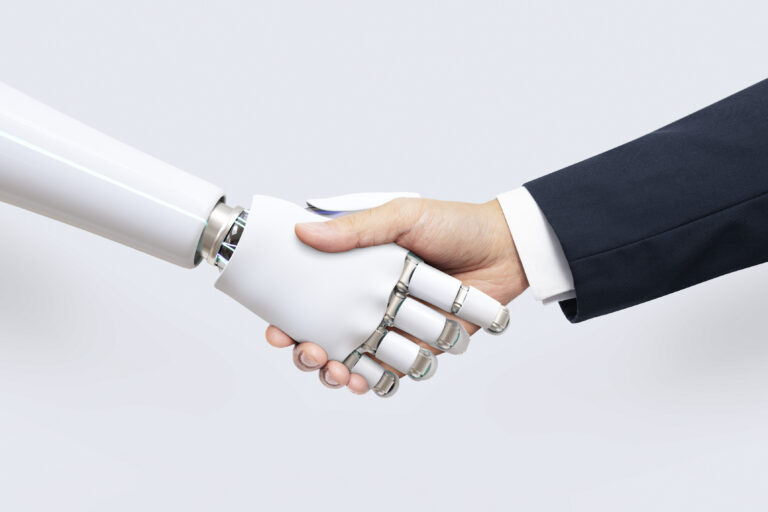



In the high-stakes world of talent acquisition, time is currency and precision is power. Organizations that once spent weeks manually sifting through hundreds of resumes are now leveraging artificial intelligence to identify top candidates in hours. The transformation is nothing short of revolutionary—87% of companies now use AI in their recruitment processes, and the technology is reshaping every stage of hiring from sourcing to onboarding.
In this guide, we’ll explore how AI is transforming recruitment, engagement, learning, and beyond.
- The AI Recruitment Revolution: Understanding the Transformation
- Key Applications: How AI Transforms the Recruitment Process
- The Business Case: Quantifying AI Recruitment ROI
- Addressing the Challenges: Bias, Ethics, and Implementation
- Success Stories: AI Recruitment in Action
- Emerging Trends: The Future of AI in Recruitment
- Best Practices: Implementing AI Recruitment Successfully
- Conclusion: Embracing the AI-Powered Future of Recruitment
The integration of AI into recruitment isn’t just about speed. It’s about fundamentally reimagining how organizations discover, evaluate, and engage talent in an increasingly competitive marketplace.
Companies implementing AI-powered recruitment tools report 30-50% faster time-to-hire, significant cost reductions, and improved quality of hires. But perhaps most compellingly, AI is addressing one of recruitment’s most persistent challenges: unconscious bias.
AI in HR is no longer futuristic—it’s fundamental. From predictive hiring to smart engagement bots, it’s changing the game
The AI Recruitment Revolution: Understanding the Transformation
Artificial intelligence in recruitment has evolved far beyond simple keyword matching in resumes. Today’s AI-powered systems leverage sophisticated technologies including natural language processing, machine learning, and predictive analytics to transform every aspect of the hiring journey.
The technology has matured remarkably. Natural language processing enables AI to understand context, nuance, and intent in candidate communications, while machine learning algorithms continuously improve their accuracy by learning from historical hiring data and outcomes. Predictive analytics can forecast workforce needs, identify flight risks among current employees, and even predict which candidates are most likely to succeed in specific roles.
The numbers tell a compelling story. According to recent industry research, AI reduces time-to-hire by an average of 50%, while AI-powered hiring tools can reduce recruitment costs by up to 30%. Organizations using AI for resume screening report saving thousands of hours annually—Unilever, for instance, saved over 100,000 hours of human recruitment time while processing nearly 2 million applications.
“AI has the capability to make our process more objective, effective, and efficient, which can free us up as human recruiters to focus on things that matter, such as relationships and strategic decision-making,“- says Roz Francuz-Harris, Vice President of Talent Acquisition at Zillow.
The investment landscape reflects this transformation. AI investment by companies surged to $142.3 billion, with a 54% increase compared to 2022, and more than 73% of companies plan to invest in recruitment automation. This isn’t just about following trends—it’s about survival in a talent market where the best candidates are off the market in days, not weeks.
Key Applications: How AI Transforms the Recruitment Process
Intelligent Resume Screening and Candidate Matching
The resume screening bottleneck has long plagued recruiters. On average, hiring teams waste approximately 23 hours per role manually reviewing resumes, only to discover that 75-88% of applicants are unqualified. AI-powered applicant tracking systems (ATS) have revolutionized this process.
Modern AI resume screening goes far beyond simple keyword matching. These systems use natural language processing to understand context, analyze work history patterns, and identify transferable skills that human reviewers might miss. The technology can parse thousands of resumes in seconds, ranking candidates based on their likelihood of success in the role.
The impact is substantial. AI screening can reduce recruiter workload by around 30%, allowing teams to identify and engage with potential candidates faster than ever before. More importantly, AI-driven matching enhances quality by analyzing subtle indicators of potential success that human recruiters might overlook—leading to a 40% increase in hiring accuracy according to some studies.
Companies like Unilever have demonstrated the transformative potential. Their AI-powered system reduced the entire hiring process from four months to just four weeks while simultaneously improving diversity in their talent pool by 25%.
Check out Top 6 AI Resume Screening Tools: Automate Candidate Evaluation in Minutes to see how modern HR teams are streamlining hiring.
AI Chatbots: Revolutionizing Candidate Communication
One of recruitment’s most persistent problems is communication breakdown. A staggering 65% of job seekers report inconsistent communication during hiring processes, leading 82% to lose trust in employers. AI-powered chatbots are addressing this challenge head-on.
These intelligent assistants provide 24/7 availability, answering candidate questions about job requirements, company culture, and application status in real-time. Unlike their early predecessors, modern recruitment chatbots use advanced natural language processing to understand intent and provide contextually relevant responses.
The results speak volumes. Companies using AI chatbots have seen a 40% rise in candidate engagement and a 30% drop in application abandonment rates. Response times have been slashed from up to seven days to less than 24 hours, dramatically improving the candidate experience.
L’Oréal’s AI chatbot, Mya, achieved remarkable success—interacting with 92% of applicants and achieving nearly a 100% satisfaction rate. Similarly, Marriott’s chatbot Olivia assists millions of candidates by helping them search for jobs, complete applications, and prepare for interviews through natural, conversational engagement.
Beyond answering questions, AI chatbots automate scheduling, send personalized updates, and can even conduct initial pre-screening assessments—freeing recruiters to focus on building relationships with top candidates.
AI-powered chatbots are redefining how candidates interact with employers — from instant responses to 24/7 engagement. Explore this shift in our detailed article on AI Recruitment Chatbots: Transforming Candidate Experience & Engagement.
Predictive Analytics: Forecasting Workforce Needs
Perhaps one of AI’s most powerful applications in recruitment is predictive analytics—the ability to forecast future hiring needs, identify skill gaps, and anticipate workforce challenges before they become problems.
Predictive analytics helps organizations anticipate future workforce needs by analyzing historical data and identifying patterns and trends. By examining factors like tenure, promotion history, engagement survey results, and performance metrics, AI models can predict which employees are at risk of leaving with remarkable accuracy.
For example, a software company might use logistic regression models to identify that developers with more than three years of experience and no recent promotions have a 40% higher likelihood of resigning within six months. This insight allows HR teams to proactively address retention through targeted interventions.
The workforce planning applications extend beyond retention. AI can analyze project pipelines and emerging technologies to forecast which technical skills will be in demand, enabling organizations to build proactive training programs and recruitment strategies. This shift from reactive to proactive workforce planning represents a fundamental transformation in how organizations approach talent management.
A retail chain reduced hiring costs by 30% by implementing predictive analytics to understand seasonal foot traffic patterns, staffing needs during slow seasons, and historical hiring costs. This data-driven approach to workforce planning eliminates guesswork and optimizes resource allocation.
Discover how predictive analytics gives you the hiring edge — read Empower Your Hiring with Predictive Analytics in Recruitment
AI-Enhanced Video Interviews: Deeper Candidate Assessment
Video interviewing enhanced by artificial intelligence represents one of the most sophisticated—and controversial—applications of AI in recruitment. These platforms analyze not just what candidates say, but how they say it, examining tone, word choice, facial expressions, and body language to assess communication skills and potential cultural fit.
The technology operates through multiple sophisticated stages. AI systems capture video and audio input, breaking down candidate performance into granular data points. Natural language processing algorithms analyze verbal responses, examining linguistic nuances, tone, vocabulary complexity, and semantic coherence. Simultaneously, computer vision technologies perform real-time facial and body language analysis, detecting microexpressions and evaluating non-verbal communication cues.
Companies using AI-assisted video analysis report that candidates selected by AI are 14% more likely to pass interviews and 18% more likely to accept job offers compared to traditional screening methods. The technology also dramatically improves scheduling efficiency—reducing the coordination time by an average of 60%.
However, this application demands careful ethical consideration. Research suggests that AI-driven video interview assessments present significant concerns regarding bias amplification, particularly related to protected attributes such as gender, ethnicity, and age. Organizations must implement transparent practices and regular audits to ensure fairness and accuracy.
The Business Case: Quantifying AI Recruitment ROI
The return on investment for AI recruitment tools extends far beyond simple cost savings. Organizations are seeing measurable improvements across multiple dimensions of hiring performance.
Cost Reduction and Efficiency Gains
AI recruiting tools can cut hiring costs by 30% through multiple mechanisms. For every open role, companies lose productivity and pay for recruiter time during the hiring process. If AI cuts 15 days from the process, that translates to approximately $3,000 saved per hire in recruiter time alone.
Resume screening automation delivers particularly impressive savings. A recruiter manually scanning hundreds of resumes at 6-7 seconds per resume can spend an entire workday on 500 applications. AI-powered resume parsing tools screen these same resumes in seconds. When recruiters spend 2.5 hours per candidate on sourcing, resume screening, and initial phone calls, an AI recruiter that automates these steps can save 1.5 hours per candidate.
Nestlé provides a striking example of efficiency gains—their talent acquisition team saved 8,000 hours monthly by implementing AI for interview scheduling automation. General Motors cut $2 million in hiring costs through strategic AI implementation.
Quality of Hire and Retention Improvements
Beyond cost savings, AI significantly improves hiring quality. AI-driven interview analytics increase hiring accuracy by 40%, while predictive analytics enhance talent matching by 67%. These improvements in matching quality translate directly to retention—with AI-assisted hires showing higher retention rates at 1-year and 2-year marks compared to traditional hiring methods.
Organizations report that AI hiring tools improve workforce diversity by 35%, leading to better team performance and financial outcomes. Companies with higher diversity levels are 35% more likely to have financial returns above their respective industry medians.
The productivity impact is equally significant. Recruiters using AI tools enjoy a 40-45% increase in overall productivity, handling 600+ applications each compared to previous volumes. This productivity boost allows talent acquisition teams to focus on high-value activities like relationship building and strategic workforce planning rather than administrative tasks.
Addressing the Challenges: Bias, Ethics, and Implementation
While AI offers transformative potential, its implementation in recruitment comes with significant challenges that organizations must address thoughtfully.
The Bias Conundrum: When AI Perpetuates Inequality
One of the most critical concerns about AI in recruitment is its potential to perpetuate or amplify existing biases. AI systems are only as good as the data they’re trained on—if historical hiring data reflects past biases, the AI will inevitably inherit and replicate them.
The cautionary tale of Amazon’s AI recruiting tool serves as a powerful reminder. The company scrapped its system after discovering it was biased against women because it had been trained on resumes submitted over a 10-year period that were predominantly from male applicants. Research from Harvard Business Review highlights that 70% of professionals acknowledge that AI recruitment tools can perpetuate existing inequalities in hiring.
The manifestations of AI bias are diverse. Algorithms may penalize candidates with employment gaps, disproportionately affecting caregivers (often women) or individuals from disadvantaged backgrounds. AI might favor candidates from prestigious universities where statistically most students come from wealthy socioeconomic backgrounds, removing stronger candidates who couldn’t afford expensive institutions.
Addressing this requires vigilance and continuous monitoring. Organizations must prioritize fairness by implementing regular algorithm audits, using diverse training datasets that represent the applicant pool, blind resume screening that removes identifying information, and ensuring human review remains central to key hiring decisions.
“Trustworthy AI would require companies and agencies to meet standards, and pass the evaluations of third-party quality and fairness checks before employing AI in decision-making,” argues Brookings Institution’s Aylin Caliskan.
Implementation Challenges: Skills Gaps and Adoption Barriers
The adoption gap presents a significant challenge in leveraging the full potential of AI in recruitment. Only 14% of companies currently use AI technology as part of their talent acquisition technology stack, with the top barriers being lack of understanding about the efficacy of tools (38%), lack of knowledge of recruiting AI tools (36%), and lack of system integrations (47%).
Many recruitment professionals haven’t received adequate training or exposure to AI tools, hindering their ability to leverage these solutions effectively. The rapid pace of technological advancement means skill requirements are continually evolving, creating a persistent challenge for organizations to keep their workforce updated.
Successful implementation requires comprehensive training and upskilling initiatives tailored to the specific needs of recruitment teams. Organizations must provide not only foundational knowledge about AI concepts but also hands-on experience with AI tools and platforms. Creating user-friendly interfaces with intuitive workflows helps accelerate adoption—with organizations reporting team adoption rates exceeding 90% within the first month when combining intuitive design with comprehensive training support.
Balancing Automation with Human Connection
A critical mistake in AI recruitment implementation is focusing solely on internal efficiency while neglecting candidate experience. Research shows that 80% of candidates better understand job opportunities through video content, yet many organizations fail to optimize the screening process for candidate engagement.
The most successful implementations maintain the human touch. As one industry expert notes, “Deals are won by having a conversation, and I think you’re always going to need a person to have that relationship and build that rapport with the customer. What we want to do is leverage AI so that they can do more of that”.
Organizations must strike a careful balance—using AI to handle repetitive administrative tasks while ensuring recruiters maintain meaningful connections with candidates. This includes using AI for note-taking during interviews so recruiters can focus on conversation, automating status updates while ensuring personalized touchpoints at key moments, and maintaining human oversight for final hiring decisions.
Success Stories: AI Recruitment in Action
Real-world case studies demonstrate the transformative impact of thoughtful AI implementation across diverse organizational contexts.
Unilever: Scaling Recruitment with AI
Unilever recruits more than 30,000 people annually and processes around 1.8 million job applications globally. To manage this immense volume, the company partnered with Pymetrics to develop an AI-driven recruitment platform.
Candidates are first assessed through gamified tests evaluating aptitude, logic, and risk tolerance using machine learning algorithms that match profiles with successful employees in similar roles. The second stage involves AI-analyzed video interviews assessing candidates based on responses, body language, and speech patterns.
The results were remarkable: Unilever reduced time spent on interviews and assessments by 70,000 person-hours annually, achieved a 50% reduction in time-to-hire, and increased diversity in hiring by 25%. The system provides feedback to all applicants, ensuring a transparent and fair process.
Brother International Corporation: Transforming Candidate Experience
Brother International Corporation needed a better way to market their brand and attract talent. They implemented an AI recruiting platform featuring a career site showcasing their employer brand, personalized job recommendations, and a conversational chatbot serving as visitors’ first introduction to the company.
After just three weeks of their career site rebrand and launch of new AI recruiting tools, Brother achieved impressive results: 140% increase in completed applications, 45% increase in total page views, 40% increase in job seekers, 15% increase in returning job seekers, and 25% decrease in time to fill.
“The truth is that when you’re hiring for one position, 99% of people will walk away without the job,” said Darius Smith, Director of Talent Marketing at Brother. “But by using an AI recruiting platform to create an amazing candidate experience, they won’t forget your company or their desire to work for you if a future opportunity arises”.
Fortune 500 Technology Firm: Enterprise-Scale AI Deployment
A Fortune 500 technology firm processing 50,000+ annual applications integrated AI dashboards for talent pipeline analytics and diversity tracking. Machine learning models screened technical and soft skills, forecasting candidate success and cultural fit. Predictive demand forecasting enabled proactive sourcing ahead of key product launches.
Within six months, the organization realized: 40% reduction in agency spend, saving $3.2 million annually; time-to-hire decreased from 60 to 35 days; recruiter productivity improved by 45%, handling 600+ applications each; and improved diversity across technology, sales, and engineering functions.
The global deployment balanced AI-driven speed with human oversight through a cross-functional ethics committee and continuous bias auditing to ensure fairness.
Skills-Based Hiring: Moving Beyond Credentials
AI is accelerating the monumental shift from credential-based to skills-based hiring. According to NACE Job Outlook 2024, less than 40% of employers use educational qualifications as a main screening factor, highlighting the transition away from academic-focused hiring.
AI-powered skills assessments match candidates to roles based on specific, tangible skills and real-world industry knowledge rather than factors that don’t necessarily equate to ability to succeed. Companies that adopt skills-based hiring report higher satisfaction with new hires, stronger job readiness, and improved performance—with 88% of tech companies already using this approach.
The benefits are compelling: wider talent pools that recognize career changers and transferable skills, better candidate-job fit resulting in increased employee performance and retention, and increased desirability as candidates want to be valued for their skills rather than their pedigree.
Skills-based organizations are 79% more likely to provide a positive workforce experience and 63% more likely to achieve results. AI makes this transition scalable by mapping job roles to essential skills, using performance data from top employees, and suggesting transferable skills from other industries.
Emerging Trends: The Future of AI in Recruitment
As we look toward 2025 and beyond, several transformative trends are reshaping the AI recruitment landscape.
Agentic AI: From Recommendation to Autonomous Action
The rise of agentic AI represents the next frontier in recruitment technology. Unlike traditional AI that provides recommendations, agentic AI can autonomously execute recruitment tasks—posting jobs, sourcing talent, sending outreach, scheduling interviews, and refining processes as it learns.
According to research from Deloitte, 70% of companies experimenting with AI or GenAI are doing so within HR, with talent acquisition being the top use case. The technology is moving from AI-assisted (automating defined tasks) to AI-augmented (providing insights and drafting content) to fully agentic systems that can manage recruitment processes with minimal human involvement.
Skills-Based Hiring: Moving Beyond Credentials
AI is accelerating the monumental shift from credential-based to skills-based hiring. According to NACE Job Outlook 2024, less than 40% of employers use educational qualifications as a main screening factor, highlighting the transition away from academic-focused hiring.
AI-powered skills assessments match candidates to roles based on specific, tangible skills and real-world industry knowledge rather than factors that don’t necessarily equate to ability to succeed. Companies that adopt skills-based hiring report higher satisfaction with new hires, stronger job readiness, and improved performance—with 88% of tech companies already using this approach.
The benefits are compelling: wider talent pools that recognize career changers and transferable skills, better candidate-job fit resulting in increased employee performance and retention, and increased desirability as candidates want to be valued for their skills rather than their pedigree.
Skills-based organizations are 79% more likely to provide a positive workforce experience and 63% more likely to achieve results. AI makes this transition scalable by mapping job roles to essential skills, using performance data from top employees, and suggesting transferable skills from other industries.
Learn how AI transforms recruitment by prioritizing skills over credentials—the foundation of modern, effective hiring practices, in our exclusive article
Enhanced Diversity and Inclusion Through AI
When designed and deployed with diversity in mind, AI recruitment tools can increase accessibility, fairness, objectivity, and transparency while broadening applicant pools and diversifying hires.
AI tools analyze job postings to detect biased language that might discourage diverse candidates—for instance, phrases like “aggressive” or “dominant” tend to deter female applicants, while gender-neutral alternatives like “collaborative” attract a broader audience. Companies using AI tools for this purpose have seen an 18% increase in applications from underrepresented groups.
AI-powered blind resume screening removes identifying information such as names, photos, and addresses, focusing solely on skills, qualifications, and experience. A McKinsey study revealed that blind resume screening reduces bias in shortlisting by 30%, enabling fairer hiring decisions.
Organizations leveraging AI for diverse sourcing report a 25% improvement in the diversity of their talent pipelines by expanding searches beyond traditional job boards to target diverse networks and communities. AI hiring tools can improve workforce diversity by 35%, with organizations that successfully implement bias mitigation seeing diversity hiring effectiveness increases averaging 48%.
Best Practices: Implementing AI Recruitment Successfully
For organizations looking to harness AI’s transformative potential while mitigating risks, several best practices emerge from successful implementations.
Start with Clear Objectives and Realistic Expectations
Define specific problems AI should solve—whether reducing time-to-hire, improving candidate quality, enhancing diversity, or scaling recruitment operations. Establish measurable metrics for success including time-to-fill reduction, cost-per-hire, quality of hire indicators, candidate satisfaction scores, and diversity metrics.
Begin with pilot programs in specific departments or for particular roles before organization-wide rollout. This allows teams to learn, adjust, and build confidence in the technology.
Prioritize Data Quality and Governance
AI thrives on data, but fragmented and incomplete datasets can derail initiatives before they start. Establish robust data governance frameworks ensuring high-quality, compliant data feeding AI systems. Clean and standardize historical hiring data before training AI models, and ensure compliance with data privacy regulations like GDPR or CCPA.
Implement Aisera’s TRAPS Framework principles—Trusted, Responsible, Auditable, Private, and Secure—to address critical concerns such as bias, data privacy, and regulatory compliance.
Invest in Training and Change Management
Provide comprehensive training programs tailored to different user roles, including foundational AI knowledge, hands-on experience with specific tools, and ongoing education as capabilities evolve. Create champions within recruitment teams who can advocate for AI adoption and support peers through the transition.
Foster a culture that embraces innovation by transparently addressing concerns, involving employees in implementation processes, and celebrating early wins to build momentum.
Maintain Human Oversight and Ethical Guardrails
Implement regular algorithm audits evaluating AI systems for fairness and bias, with particular attention to outcomes across different demographic groups. Establish cross-functional ethics committees including HR, IT, legal, and compliance representatives to oversee AI deployment and address ethical concerns.
Ensure human review remains central to final hiring decisions, particularly for senior roles or when AI flags potential concerns. Use AI to augment human judgment, not replace it.
Optimize for Candidate Experience
Remember that 60% of job seekers report negative experiences, and many share these online, potentially damaging employer brand. Design AI implementations with candidate experience as a priority—ensuring chatbots provide helpful information, automated communications feel personalized, the application process remains smooth and intuitive, and candidates receive timely updates throughout the hiring journey.
Test AI tools from the candidate perspective, solicit feedback regularly, and make continuous improvements based on insights gathered.
Conclusion: Embracing the AI-Powered Future of Recruitment
The integration of artificial intelligence into recruitment represents not just a technological evolution but a fundamental transformation in how organizations discover, evaluate, and engage talent. With 87% of companies already using AI in their recruitment processes and investment continuing to surge, the question is no longer whether to adopt AI but how to implement it strategically and ethically.
The business case is compelling—30-50% faster time-to-hire, up to 30% reduction in costs, 40% improvements in hiring accuracy, and significant gains in workforce diversity. Yet the true power of AI lies not in replacing human recruiters but in amplifying their capabilities, freeing them from administrative burdens to focus on relationship building and strategic decision-making.
As Roz Francuz-Harris of Zillow articulates, AI has the capability to make recruitment processes more objective, effective, and efficient, allowing human recruiters to focus on what matters most—relationships and strategic decision-making.
The path forward requires thoughtful implementation that balances technological capability with human judgment, efficiency with empathy, and automation with ethical oversight. Organizations that successfully navigate this balance will gain significant competitive advantages in attracting and retaining top talent.
The future of recruitment is neither fully human nor fully automated—it’s a powerful collaboration between human insight and artificial intelligence, each amplifying the strengths of the other. For forward-thinking organizations willing to embrace this transformation while maintaining their commitment to fairness, transparency, and candidate experience, the AI-powered future of recruitment offers unprecedented opportunities to build stronger, more diverse, and more capable workforces.
The revolution is already underway. The question now is how quickly and effectively your organization will join it.