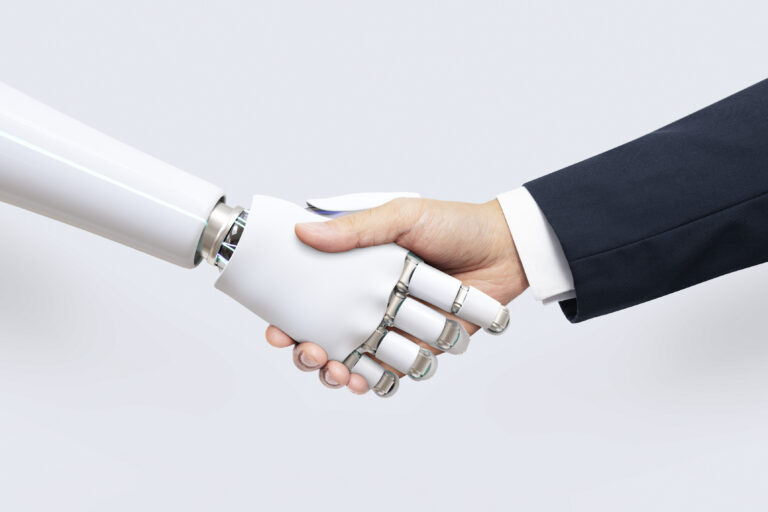

AI replacing jobs isn’t the end—it’s evolution. Learn how to adapt, upskill, and stay relevant as automation reshapes the future of work.

Every few months, a big name hits the headlines — this time, it’s Amazon earlier Intel, and Microsoft and other giants. Thousands of layoffs. Different industries, same narrative: “restructuring,” “efficiency,” “AI transformation.”
It’s hard not to notice a pattern. The official statements sound familiar: “strategic restructuring,” “cost optimization,” “efficiency improvements.” Behind every corporate memo filled with empathy and business jargon lies one silent disruptor — AI.
We’re living through a quiet revolution in the workplace, where algorithms are taking over not through chaos, but through calculation. And while the headlines focus on numbers — how many jobs are cut, how much is saved — the real story lies in how work itself is being rewritten.
Table of Contents
The uncomfortable truth: AI is replacing roles — just not the way we imagined
For years, the conversation about AI replacing jobs felt abstract — something that might happen in a distant, automated future. That future has quietly arrived.
AI isn’t marching in to snatch away entire professions overnight. Instead, it’s dismantling them task by task.
Take any modern job — HR, marketing, finance, or operations — and break it down into components. You’ll find that much of it is repetitive, rule-based, and predictable.
That’s exactly the kind of work AI loves.
Resume screening? Automated.
Market reports? Generated in seconds.
Meeting notes? Summarized effortlessly.
Data entry, scheduling, forecasting — all delegated to intelligent systems that never tire, never complain, and never need a weekend off.
The result? Mid-level roles that once thrived on efficiency are now quietly becoming redundant.
But here’s the twist: AI isn’t killing jobs — it’s killing complacency.
We’re witnessing the biggest skill reset in modern history. The question isn’t if AI will change your role — it’s how fast you’re willing to evolve with it.
Why roles are becoming redundant
The structure of most job descriptions still belongs to a pre-AI era. They’re filled with procedural tasks designed to ensure efficiency in human terms — speed, accuracy, and consistency.
But efficiency has now been automated.
The new benchmark is intelligent adaptability. Organizations are reimagining workflows around AI co-pilots — tools that can predict, automate, and recommend faster than any team of humans.
This shift is not just about cost-cutting. It’s about redefining what humans are hired for.
Instead of routine work, companies are investing in roles that blend critical thinking, creativity, and contextual decision-making — things AI can’t easily replicate.
So, the real threat isn’t AI itself. It’s being caught in a job description that stopped evolving while the technology didn’t.
The “Co-Pilot Mindset”: Humans who know how to fly with AI
The professionals who will thrive in this transition are not those fighting AI, but those flying alongside it.
Think of AI as your co-pilot — not your competitor.
You don’t need to code machine learning models or build algorithms from scratch. What you need is the ability to command AI effectively.
That means mastering the art of prompting, process orchestration, and tool literacy.
For recruiters, it means understanding how AI filters candidates — and then designing human-first hiring experiences that balance data with empathy.
For marketers, it means using generative tools for insights but still crafting narratives that emotionally connect with audiences.
For HR leaders, it’s using analytics to drive decisions while keeping the human pulse of the workforce alive.
AI may enhance your work, but it can’t replace your judgment, intuition, or ability to read a room — at least not yet.
How to deal with this transition
AI replacing jobs isn’t a distant possibility; it’s today’s reality. The only way to stay relevant is to adapt faster than your role evolves.
Here’s how to start:
- Audit your role for AI vulnerability
List your daily tasks. Then ask — which of these are repetitive, rule-based, or data-driven? That’s where AI will strike first. Knowing your vulnerabilities gives you a roadmap for reinvention. - Learn to speak AI’s language
You don’t need a degree in data science, but you do need to know how to get the most out of AI tools. Experiment with ChatGPT, Gemini, or Copilot. Learn how to ask better questions, build workflows, and translate ideas into automation. - Humanise your value
The more AI automates, the more valuable your distinctly human skills become. Focus on creativity, storytelling, emotional intelligence, and systems thinking — qualities that add depth to AI-driven efficiency. - Be the bridge, not the bottleneck
Every organization needs people who can connect technology with people. If you can help teams adopt AI responsibly and meaningfully, you’ll never be replaceable. - Adopt a learning mindset
The half-life of skills is shrinking. What you learned three years ago may already be outdated. Commit to continuous learning — micro-courses, workshops, and AI literacy programs — not as a checkbox, but as a habit.
For a deeper look at how AI is reshaping recruitment from the inside, read Confessions of a Hiring Bot: What I’m Really Thinking About You, Recruiters
The real shift: From job security to skill security
Let’s be honest — the age of job security is over. But skill security is more powerful anyway.
The recent waves of layoffs from global tech leaders aren’t just corporate cost exercises; they’re early signals of a workforce realignment.
Companies aren’t eliminating humans; they’re eliminating redundancy.
The professionals who survive this transformation won’t be those who cling to old processes, but those who can redefine their value in an AI-first world.
In the age of automation, your resume is no longer your proof of worth. Your ability to evolve is.
The good news? You don’t have to outsmart AI — you just have to out-human it.
Your curiosity, creativity, and empathy are still your greatest differentiators. Machines can process data, but they can’t understand context. They can write, but they can’t feel. They can predict behavior, but they can’t inspire it.
The human edge
So, can AI replace your job? Possibly.
Can it replace you? Absolutely not.
What AI can do is push you to rediscover the uniquely human edge — the ability to question, to create, to care, and to connect meaningfully in a world obsessed with optimization.
This isn’t the end of work. It’s the evolution of worth.
As AI reshapes industries, the people who thrive will be the ones who don’t just use AI — but know how to think alongside it.